

A timing advance processor (TAP) is a key bit of kit when you’re running a car on alternative fuels like CNG or LPG. Petrol and gas burn differently — gas needs the spark to fire earlier in the cycle. That’s where the TAP comes in. It tweaks the ignition timing so the engine runs properly on gas instead of petrol.
If you’re a mechanic doing conversions or just want to understand how these things work, this guide walks you through the different types and how to pick the right one for the job.
What You Need to Know
- A TAP adjusts the spark timing to suit CNG or LPG, which burn more slowly than petrol.
- Without it, you’ll get knocking, poor fuel economy, and the engine will feel flat.
- Different ignition systems need different TAP models — you can’t just chuck any one in.
- Fitting it properly matters. Follow the manufacturer’s instructions.
- Check and recalibrate it now and then to keep things running sweet.
What Is a Timing Advance Processor?
A TAP is a small electronic box that changes when the spark plug fires. When you switch from petrol to gas, the fuel burns at a different rate. The TAP shifts the timing forward or back so the combustion happens at the right moment.
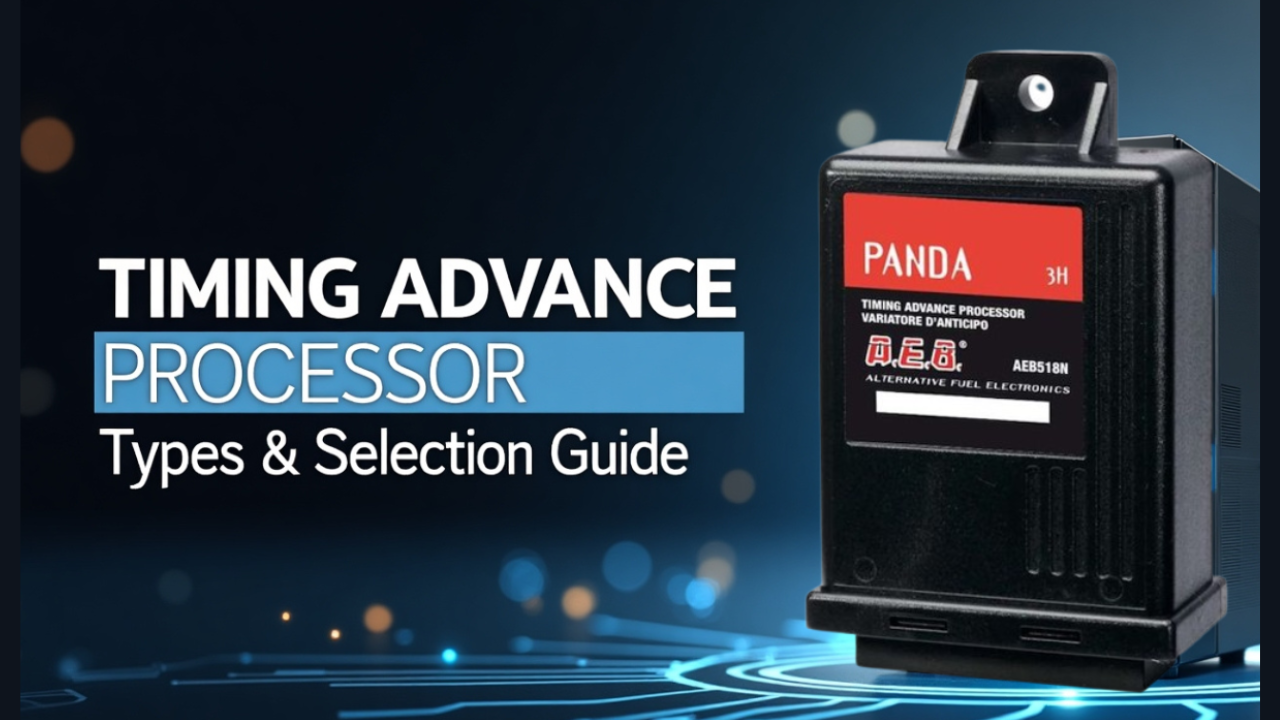
It works by intercepting the ignition signal and adding a delay or advance to it. This stops the engine from knocking, saves fuel, and keeps the power up when you’re running on gas.
Most TAPs also have an emergency bypass. If the unit packs up, you can short it out and the car goes back to its original petrol timing. Handy if you’re stuck on the road.
Types of Ignition Systems
Mechanical Breaker Points
Old cars use a distributor with physical contact points inside. These need a mechanical timing setup and a TAP that can handle basic electrical signals.
The AEB531 is built for these systems. It goes between the distributor and the coil, picking up the low-voltage signal from the breaker points.
Electronic Ignition with Coil and Distributor
These replaced the mechanical points with an electronic switch, but kept the distributor. They need a TAP that can work with electronic ignition modules.
The AEB526N and AEB549N fit here. They connect to the ignition module output and can switch faster than the mechanical type.
Electronic Systems with Ignition Modules
More advanced setups have ignition modules that change timing based on engine speed and load. For these, you want the AEB515N — a reprogrammable TAP.
You can adjust the timing curves to match specific engines and fuels. It covers a wide range of vehicles.
Crankshaft Position Sensor Systems
Modern engines use a crankshaft position (CKP) sensor to tell the ECU exactly where the engine is in its cycle. These need a TAP that can read digital sensor signals properly.
There are two types of CKP sensors:
- Inductive sensors: create an analogue voltage signal as the trigger wheel teeth pass by
- Hall effect sensors: put out a digital square wave when the magnetic field changes
Picking the Right TAP
Here’s what to check before you buy:
- What ignition system have you got? Breaker points, electronic distributor, or CKP sensor? Each needs a different TAP.
- What fuel are you running? CNG, LPG, or both? Some TAPs handle both, others are set up for one.
- How much timing advance do you need? Different engines need different amounts.
- Does it have an emergency bypass? Worth having in case something goes wrong.
Read Also: How Does Anon Vault Offer Privacy and Security in 2026
AEB Timing Advance Processors
| Model | Ignition System | CKP Sensor | Fuel | Timing Range | Emergency Bypass |
| AEB531 | Mechanical points | — | CNG, LPG | 0–25° | Yes |
| AEB526N | Electronic with distributor | — | CNG, LPG | 0–20° | Yes |
| AEB549N | Electronic with distributor | — | CNG, LPG | 0–20° | Yes |
| AEB515N | Electronic with a module | — | CNG, LPG | Programmable | Yes |
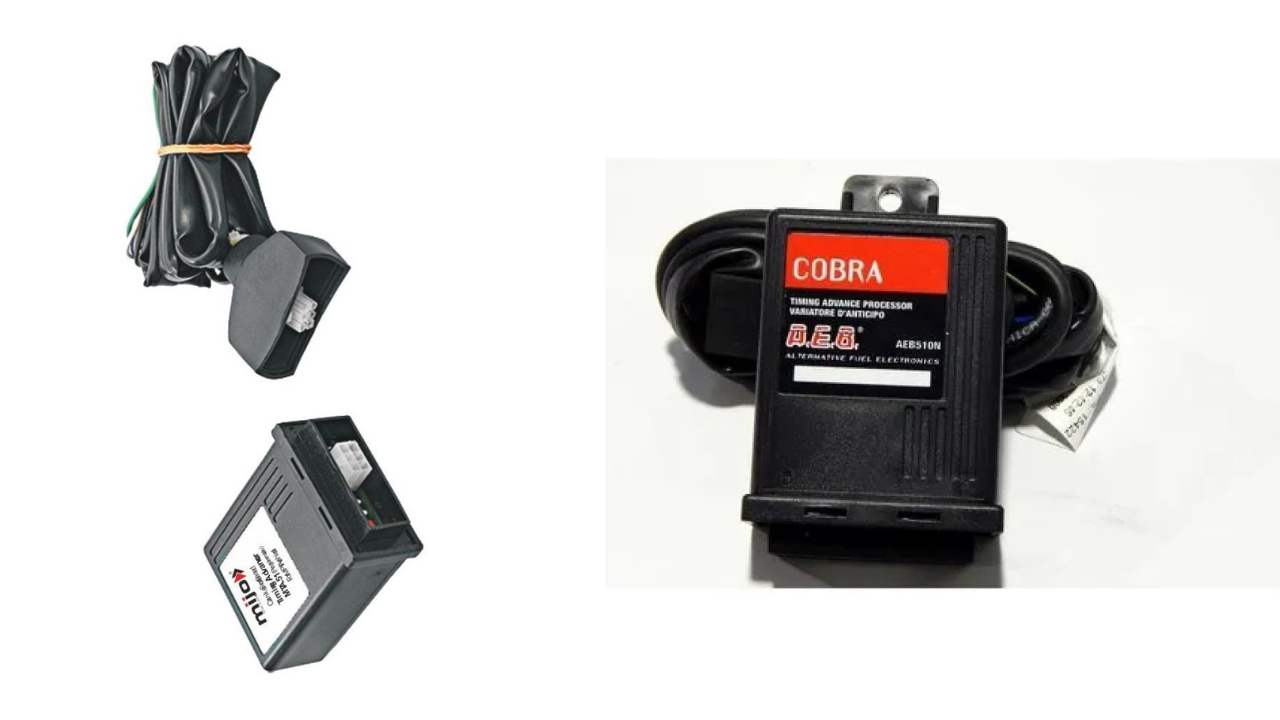
| AEB510N | CKP sensor | Inductive | CNG, LPG | 0–30° | Yes |
| AEB516N | CKP sensor | Inductive | CNG, LPG | 0–30° | Yes |
| AEB511N | CKP sensor | Hall effect | CNG, LPG | 0–30° | Yes |
| AEB518N | CKP sensor | Hall effect | CNG, LPG | 0–30° | Yes |
Compatibility at a Glance
| Ignition System | TAP Models | How to Fit |
| Mechanical points | AEB531 | Between distributor and coil |
| Electronic with coil & distributor | AEB526N, AEB549N | Tap into the ignition module output |
| Electronic with ignition module | AEB515N | Between distributor and coil |
| CKP sensor (inductive) | AEB510N, AEB516N | Watch the sensor signal |
| CKP sensor (Hall effect) | AEB511N, AEB518N | Check the 5V reference voltage |
How to Fit and Set Up a TAP
Basic Steps for All Systems
- Disconnect the battery so you don’t fry anything.
- Find the right wires to tap into based on your ignition type.
- Wire the TAP in according to the diagram.
- Set the timing advance using the dials or switches.
- Run the engine and check it’s working right.
Mechanical Points (AEB531)
- Connect the TAP between the distributor negative and the coil negative.
- Earth it properly.
- Mount it somewhere dry and away from heat.
- Use the potentiometer to set the advance. Start around 10–15 degrees.
- Check with a timing light that the advance is actually changing.
- Test the emergency bypass to make sure it works.
Electronic Ignition (AEB526N, AEB549N)
- Find the ignition module output wire.
- Wire the TAP into that signal.
- Connect the power and the earth.
- Adjust the advance using the DIP switches or potentiometer.
- Watch how the engine behaves as you tweak it.
- Check it at idle and at different revs.
CKP Sensor Systems (AEB510N, AEB516N, AEB511N, AEB518N)
- Find the CKP sensor plug.
- Wire the TAP into the sensor signal wire.
- Keep the polarity and shielding right.
- Use an oscilloscope to check that the signal looks clean.
- Set the advance based on what sensor you’ve got and what the engine needs.
- Test it across the full rev range.
When Things Go Wrong
| Problem | What’s Probably Causing It | What to Do |
| Engine knocking on gas | Not enough timing advance | Wind the advance up |
| Sluggish acceleration | Too much timing advance | Wind the advance down |
| The engine won’t start | Wiring connected wrong | Check every connection |
| Rough idle | The idle bypass is set wrong | Adjust the idle advance setting |
| TAP is not doing anything | No power or bad earth | Check the 12V supply and earth |
Emergency Bypass
Every AEB TAP has a bypass connector. It’s there so you can cut the TAP out of the loop if it fails.
How It Works
- It connects the original ignition parts directly together.
- The TAP gets completely skipped.
- The engine goes back to factory petrol timing.
- You can keep driving even if the TAP dies.
When to Use It
- The TAP seems to have packed up.
- The engine runs worse after fitting the TAP.
- You’re diagnosing a problem and need factory timing to compare.
- You’re in a jam and need the car running normally.
Getting the Best Out of CNG and LPG
Picking the right TAP and setting it up properly makes a real difference to how the engine runs on gas.
CNG
- Higher octane means you can run more safely.
- The flame spreads more slowly, so you need earlier ignition.
- Cleaner burning means less chance of knock.
LPG
- Octane is similar to high-grade petrol.
- It vaporises differently, so timing needs are slightly different.
- Tank pressure matters for how the system is set up.
Making the Right Choice
Start by figuring out what ignition system your car has. Is it old-school points, an electronic distributor, or a modern CKP sensor setup? Then think about what fuel you’ll run, how much timing change you need, and whether you want extras like programmability or plug-and-play wiring.
For anything complicated — especially modern electronic ignition, it’s worth getting a pro to fit it. A good TAP pays for itself through better running, better economy, and cleaner emissions on gas. Stick to known brands like AEB that have been in the alternative fuel game for years and can back you up with proper support.
Final Word
A timing advance processor isn’t the most exciting bit of kit you’ll bolt to a car, but it matters more than you’d think when you’re running on gas. Get the wrong one or fit it badly and the engine will knock, feel flat, and drink fuel. Get it right and the car runs almost as sweet on LPG or CNG as it does on petrol.
The trick is knowing what ignition system you’ve got and picking a TAP that actually talks to it. Old point systems, electronic distributors, and modern crank sensors all need different boxes. Don’t guess — check, then buy the right one.
Fit it properly, set the advance with a timing light, and check it now and then. Most of these units are pretty reliable once they’re in, but it’s worth knowing where the emergency bypass is in case something goes wrong on a long run.
If you’re not confident with wiring or oscilloscopes, pay someone who knows what they’re doing. It’s not worth saving a few quid only to end up with an engine that won’t start or runs rough for months. A good installer will have seen your setup before and know exactly which TAP to use and where to put it.
Running on gas saves money and cuts emissions, but only if the engine is actually happy on it. The TAP is what makes that happen.
Read More: Sdms.px.indianoil.in Login: Register to Indian Oil
