

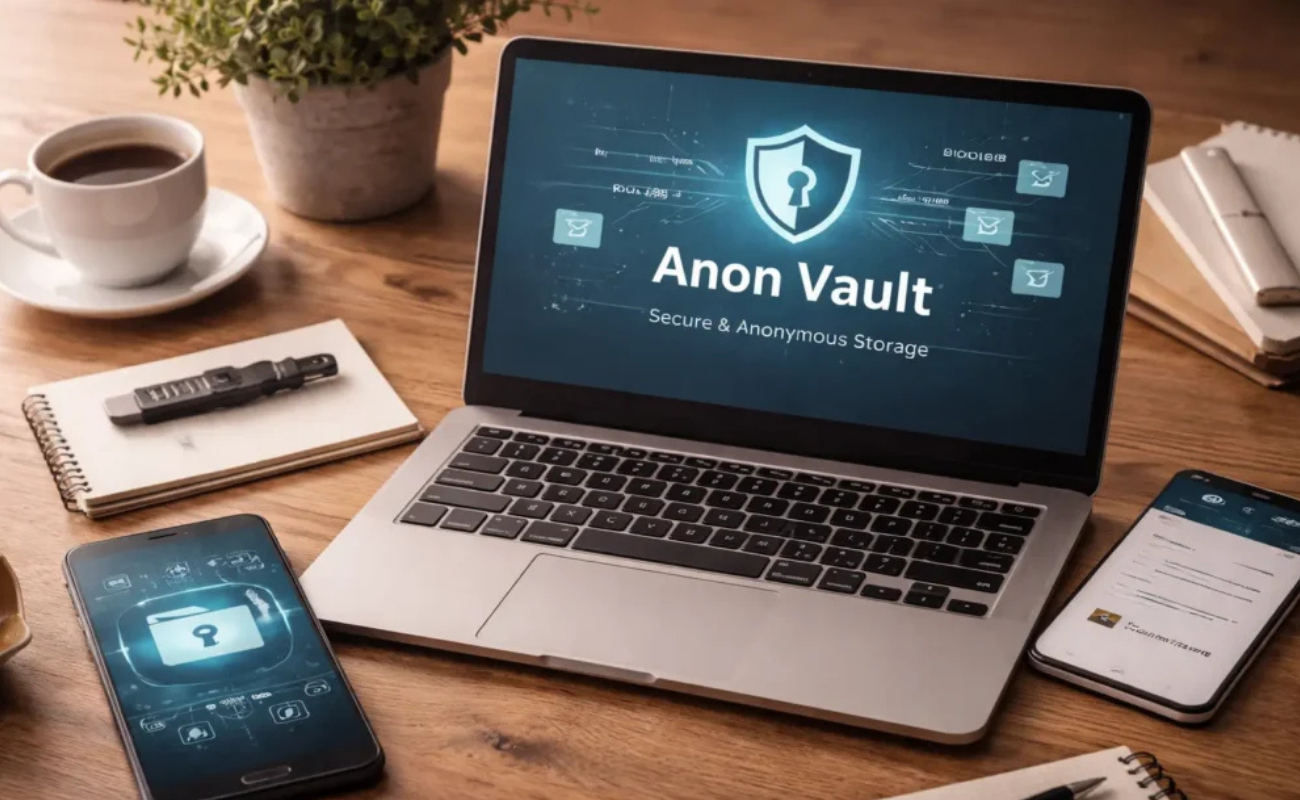
These days, your data’s basically never safe. Breaches happen all the time, random people access stuff they shouldn’t, and you don’t even know until it’s too late. That’s where Anon Vault comes in. It locks your files down tight with end-to-end encryption, spreads them across decentralized storage so there’s no single point to hack, and runs on zero-knowledge architecture—meaning even they can’t peek at what you stored. Whether you’re just one person with sensitive docs or a whole company trying to keep things private, this platform handles your files without selling you out. Here’s everything you need to know about how it actually works.
What is an Anon Vault?
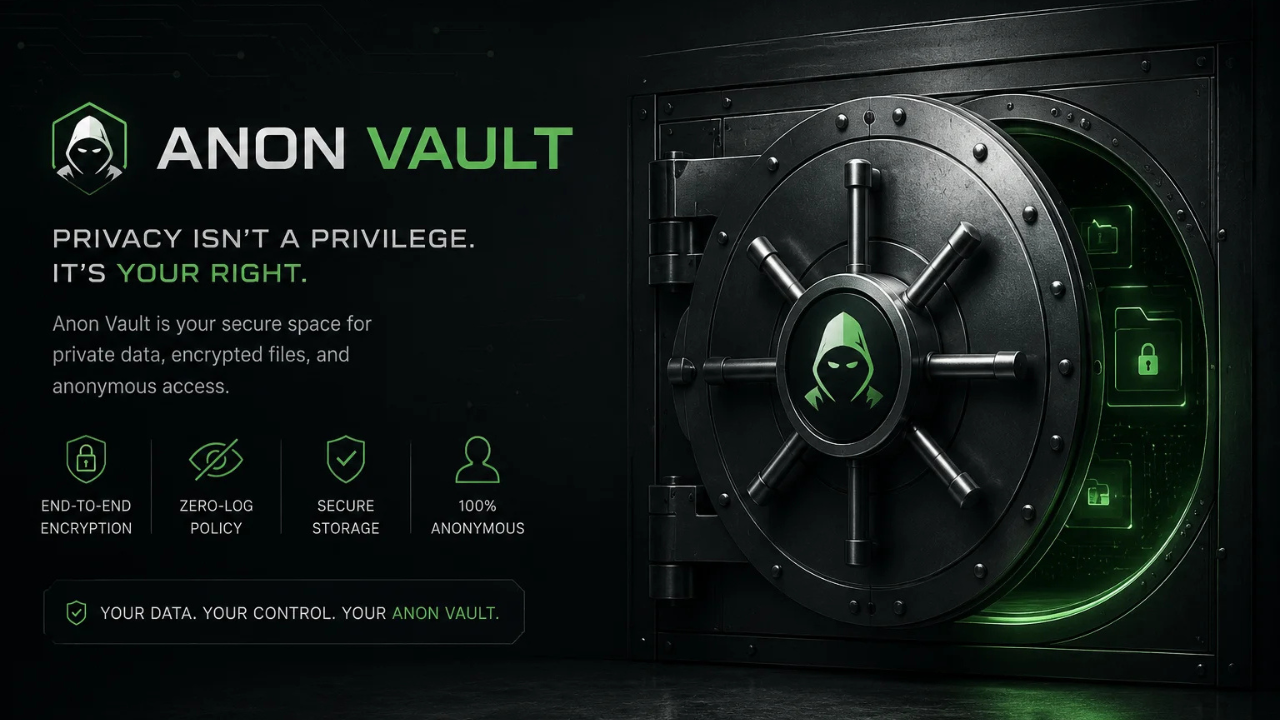
Anon Vault is a storage platform that puts privacy first. You can store and share files without giving them any personal info.
The system locks everything down with strong encryption. Your data stays encrypted from upload all the way through storage to when you pull it back out. Only the people you authorize hold the keys to unlock it.
You do not need to register. They do not ask for your name, email, or phone number. That removes the usual risk of your personal details getting leaked in a data breach.
You can also set files to delete themselves after a set time. You control how long your data sticks around. This works well for sensitive stuff where keeping records forever could come back to bite you.
Important Privacy Features of Anon Vault
End-to-End Encryption
Anon Vault encrypts your files before they ever leave your computer. They travel through the internet locked up tight. The storage servers only ever see scrambled data.
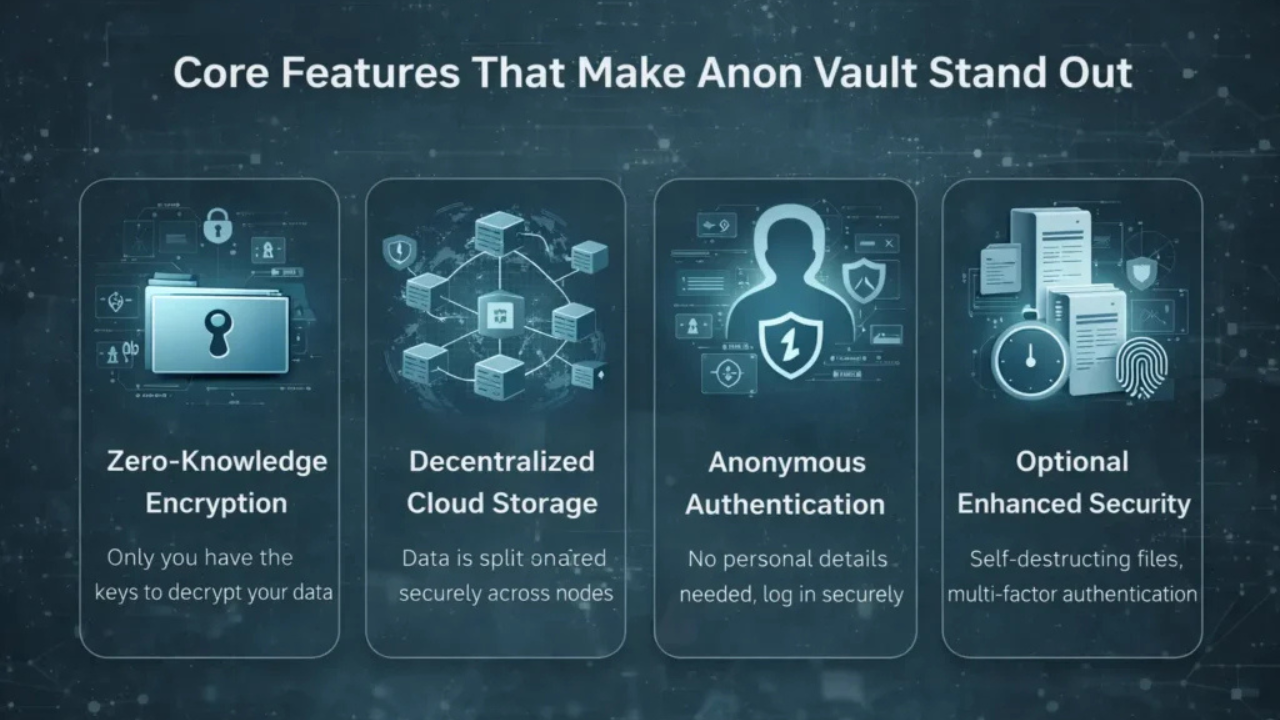
It uses AES 256 encryption for everything. That is the same military-grade protection government agencies use for classified material.
If someone intercepts your data, it is useless to them. Third parties cannot unlock your files without the right keys. Not even Anon Vault itself can peek at what you stored.
Zero Knowledge Setup
The platform runs on zero-knowledge principles. The service provider has no idea what is inside your files. Only you hold the encryption keys.
This stops internal breaches cold. Even if their servers get hacked, your encrypted data stays safe. There are no backdoors for employees or outside parties to slip through.
When you authenticate, it does not reveal your file contents. The system checks your access rights through cryptographic proofs instead of looking at your actual data.
Decentralized Storage
Most places just throw all your stuff on one big server. Hack that and they get everything. Anon Vault doesn’t work like that. It cuts your encrypted files into pieces and spreads them across different nodes.
Each file gets broken into chunks, scrambled, and sent to separate servers. To actually put your file back together, someone would need to break into multiple places at the same time. Good luck with that.
If one server crashes or gets hit, the rest keep going. You still get your stuff even when part of the system is down.
Blockchain Records
Every move you make with your files gets written down on the blockchain. Upload something, open something, change something—it’s all logged forever. Can’t be changed later, can’t be erased. Permanent record of everything.
These logs prove nobody tampered with your data. You can check that your files stayed exactly the same since you uploaded them. Any funny business shows up right away when you look at the chain.
Smart contracts handle access permissions automatically. Rules kick in based on conditions you set beforehand. No human error in the security process.
Multi-Factor Authentication
Getting into your account takes more than one step. You combine passwords with biometric data and time-based codes.
Each factor works on its own. Cracking one does not open the door. Attackers would need to break through every layer simultaneously.
You can add hardware tokens for extra protection. You need the physical device to get in. That stops remote takeovers dead.
Security Advantage of Anon Vault
Organizations protect client info through a distributed architecture. If one service goes down, your data is still available. Multiple nodes make sure you never lose access.
Crypto users lock down wallet keys and transaction records. Even if Anon Vault gets breached, zero-knowledge design keeps your stuff safe. Private keys never leave your device unencrypted.
Legal teams store case files with tamper-proof verification. Blockchain records prove document authenticity in court. The chain of custody stays checkable from start to finish.
Remote workers share sensitive docs without needing company VPNs. Files stay encrypted while moving and while sitting in storage.
Read Also: ItsNewzTalkies Com: The Ultimate Guide to this Online Platform
How Anon Vault Works
Upload starts with encryption on your device. Files get locked up before they ever leave your computer. Then the encrypted data heads out to distributed storage nodes.
Every time you do something with your files, it gets written down on the blockchain. The whole network checks it, stamps the time on it, and locks it in permanently. So there’s a record of everything—who touched what, when, and how. No erasing it, no pretending it didn’t happen.
To grab your stuff back, you gotta prove it’s really you. Multiple checks, not just one password. The system looks at every layer of verification before letting you through.
The actual unlocking happens on your own device. Files come down encrypted, and only your private keys open them up. Not their servers, not anyone else—just you.
| What You’re Doing | How They Lock It Down | How Strong It Is |
| Uploading | Scrambled on your end before it even leaves | Military-grade AES-256 |
| Sending it over | Encrypted while traveling | TLS 1.3 protocol |
| Storing it | Split up and spread around | Multiple copies across nodes |
| Getting in | Proving it’s you | Three layers of verification |
| Opening it | Unlocked on your own device | Only your keys work |
Anon Vault Privacy Protection Comparison
Normal cloud services demand personal info when you sign up. Emails, phone numbers, payment details — all breach targets waiting to happen. Anon Vault skips all of that.
Centralized platforms are single points of failure. One hack exposes everything. Distributed architecture spreads the risk around, so no single break compromises you.
Standard services keep copies of encryption keys. Providers can access your files when courts ask or when they feel like it. Zero-knowledge design means Anon Vault cannot access your stuff, no matter what.
| Feature | Anon Vault | Traditional Services |
| Registration | No personal information is needed. | Email and phone must be used |
| Encryption Keys | User-controlled exclusively | Provider access available |
| Storage Architecture | Decentralized nodes | Centralized servers |
| Data Tracking | Zero activity logging | Extensive analytics collected |
| File Access | Blockchain verification | Standard authentication |
Who Needs Anon Vault Security
Businesses
Companies have to protect client records with encrypted storage. Due to breaches, the information brings fines and reputation damage. This Zero-knowledge architecture platform will help you stay compliant with privacy laws. This platform also secures your Financial transaction records. If their infrastructure fails, distributed storage keeps things running.
Crypto Traders
Wallet private keys need rock-solid protection. One leaked key and your holdings are gone. Hardware isolation stops remote extraction.

Transaction history stays private. Your trading patterns and portfolio value stay hidden. Competitors cannot snoop your strategy through leaks.
Everyday Users
Personal docs get serious protection. Medical records, bank statements, ID files stay locked down. Sharing links expires automatically when you say so.
Photos and videos keep their privacy. They stay encrypted during storage and sharing. Recipients cannot pass your files around beyond those you intended.
Lawyers
Case files need tamper-proof storage. Blockchain proves document authenticity. Courts accept verified chains of custody as evidence.
Client communications stay confidential. Attorney-client privilege covers digital storage, too. Unauthorized access attempts trigger alerts right away.
How It Stacks Up Against Other Privacy Tools
VPNs hide your network traffic but do nothing for stored files. Anon Vault encrypts your content regardless of network security. Your files stay safe even on sketchy connections.
Password managers lock down credentials but store them in one place. One master password breach and everything is exposed. Distributed architecture prevents total collapse from a single failure.
Encrypted messaging protects messages in transit. Once delivered, they are vulnerable on the recipient’s device. Anon Vault keeps encryption going through the entire file lifecycle, including where it finally lands.
Self-hosted options need serious tech skills. Server upkeep, security patches, backups — it never ends. Managed infrastructure takes that burden off you while keeping control through your cryptographic keys.
Breach Protection
More than 60 % of small businesses suffered security attacks in 2022. In 2022, more than 60 % of small businesses were targeted by security attacks. That’s largely due to traditional storage methods and poor encryption in centralised storage.
Anon Vault fills in the weak spots. There are no complete files on any one server. It would take multiple independent systems to be breached by an attacker.
But with zero-knowledge design, insider dangers are prevented. No access for employees to users’ data. You can’t decrypt with admin privileges.
Automatic updates maintain defenses to be updated against any new threats. Ongoing audits assess the effectiveness of encryption and identify vulnerabilities early. Bug bounty rewards can help the public to report vulnerabilities responsibly.
Final Word
Anon Vault is not perfect, but it does solve a real problem. Most cloud storage asks for your life story at signup, stores your files in one place, and keeps copies of your keys just in case. That works fine until it does not. Anon Vault flips the script: no personal info required, your files split across multiple nodes, and only you hold the keys. If privacy actually matters to you, whether you are handling client data, protecting crypto assets, or just do not want some company reading your medical records, it is worth a look. The tradeoff is that you need to keep your keys safe because if you lose them, nobody can bail you out. That is the deal with true privacy: the responsibility lands on you.
Read More: Hamraaz Web: The Ultimate Login and Access Guide 2026
